
Most moms are advised not to run with a newborn in a jogging stroller until their baby is 6 months old. It’s the ultimate pass to rest your running legs for half the year while your baby gains neck strength.
But if you’re a restless runner like me, waiting 6 months after giving birth to go for a jog is torture.
Fortunately, it is possible to run with a newborn before they are 6 months old without compromising their developing spines and heads. Doing so needs the right equipment and being mindful of the terrain you run on.
This article specializes in running with your newborn in a jogging stroller and what you need to know to do it safely. If you’re looking for mom-to-mom input on exercising postpartum and finding time to exercise as a busy mom, check out our other articles here.
What you need to know about running with a newborn
Being able to run with your newborn in a jogging stroller lets you return to running sooner than the 6-8 month mark (generally when a baby can hold their head up without assistance).
Doing so safely, however, requires equipping your stroller with the correct gear that allows it to hold an infant car seat on its frame.
What you MUST HAVE to run with a newborn
The following are non-negotiable essentials for running with your young baby in tow:
1. Jogging stroller
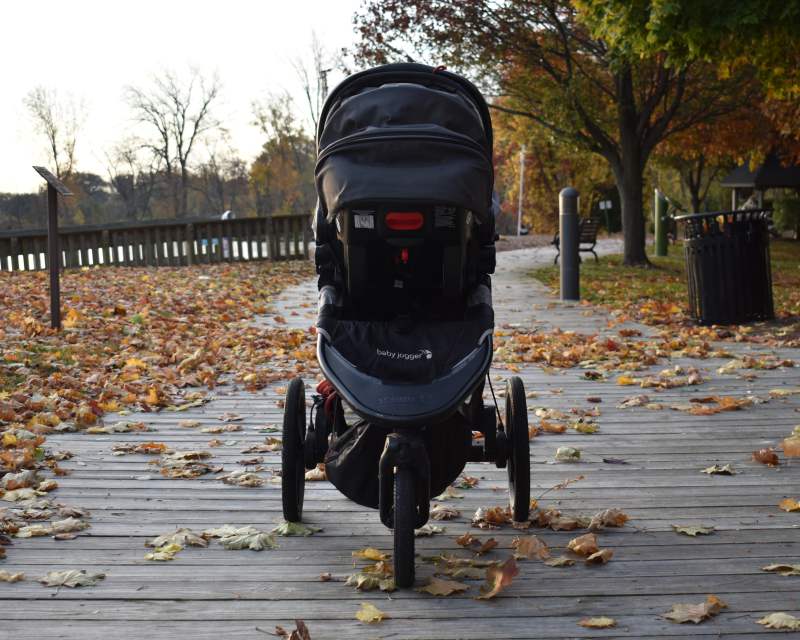
A jogging stroller is the top necessity for stroller running with a baby of any age. Jogging strollers are manufactured to maintain a stable ride while running.
Regular strollers are top-heavy, and pushing one faster than 4.5 mph can cause it to tip or, at the very least, create a rough ride that puts your baby at risk.
A jogger’s large, air-filled wheels and top-of-the-line suspension system absorb the impact of uneven terrain to prevent baby from enduring a head-rattling ride.
The smooth ride a jogging stroller provides is especially important for a newborn passenger because their underdeveloped neck strength can’t handle the jilts and jolts that intensify when running with a stroller on the pavement.
When choosing the best running stroller, know that any jogging stroller worth your money needs to have the following features:
- Fixed front wheel locks in place to keep the stroller steady and from veering into someone’s lawn.
- Handbrake and safety strap is located on the handlebar, these safety features keep you in control of your jogging stroller while running.
- Stroller canopy provides baby with shade and protection from wind, rain, and other harsh elements.
Navigate which jogging stroller is best for you with our collection of stroller reviews.
2. Infant car seat
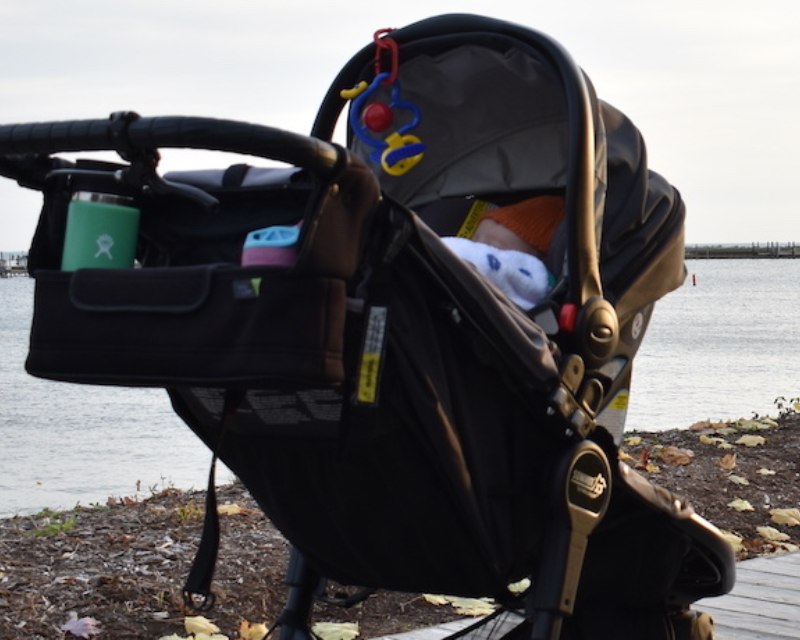
An infant car seat that attaches to your jogging stroller’s frame is crucial to run with a newborn. By itself, a jogger’s seat doesn’t lie flat and can’t properly support a newborn and its bobbling head.
The only way to run with a newborn in a jogging stroller is to have them in an infant car seat mounted onto your jogger’s frame.
An infant car seat is the safest seating arrangement for a baby under 6 months old when riding in a jogging stroller. It keeps the baby in a reclined position and securely nestled in the seat cushioning, preventing them from being tossed about during the ride.
3. Travel system
A travel system refers to a jogging stroller’s ability to secure an infant car seat onto its frame. This is done with car seat adaptors (next on our list of essentials).
A travel system lets you to transfer your baby to the jogging stroller without removing them from their car seat.
When browsing jogging strollers, look for “travel system capability“ in the description/features.
4. Car seat adaptors
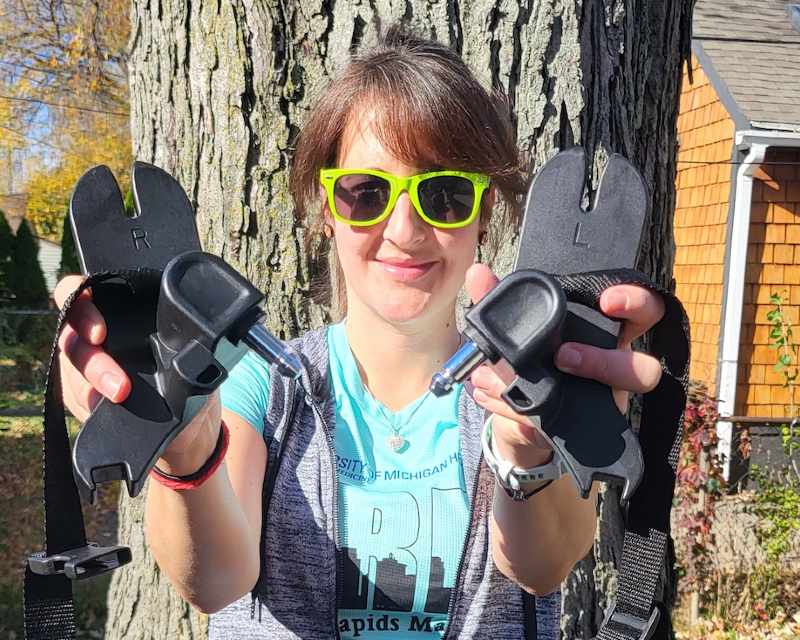
Car seat adaptors are bits of stroller hardware that can be installed easily onto your jogging stroller and convert it into a travel system. The base of an infant car seat clicks into the car seat adaptors and fits securely onto the jogger’s frame.
Car seat adaptors also allow you to pop your newborn between car and stroller without having to wrestle them out of the car seat.
Tips for running with a newborn
The following are base tips for your first runs out with your newborn.
Know baby's feeding schedule
The first step to finding time to exercise when the entirety of your existence is anchored to the 24/7 demands of a newborn is learning their feeding schedule.
Then, you can begin to take advantage of the time you have between feeds.
When you arrive at a point where your baby can be chill for a few hours after a feed, pack them into the jogging stroller and head out for a run after nursing (when you are temporarily emptied of a brimming milk supply).
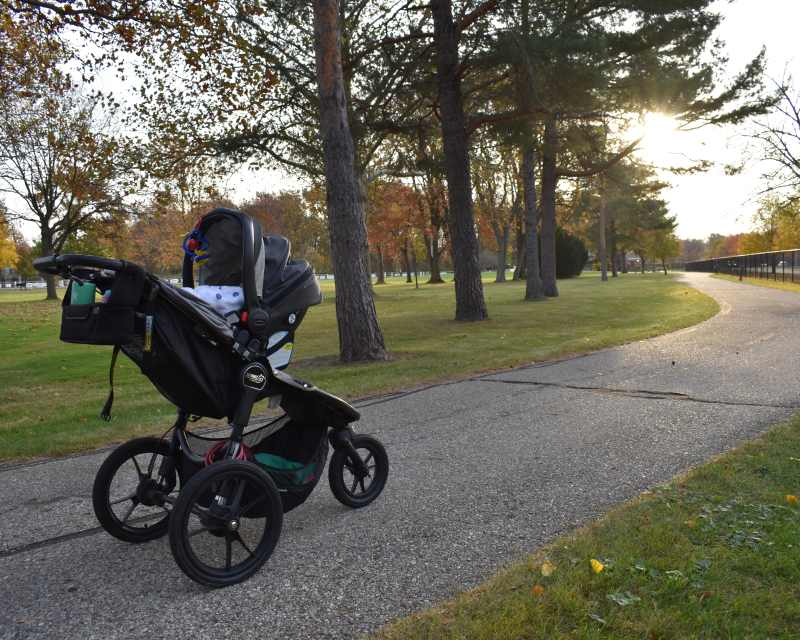
Run on smooth paved roads
Despite the superior suspension system and shock absorption in jogging strollers, stick to smooth paved routes when you run with a newborn.
Sidewalks are good as long as you’re vigilant of harsh bumps and misalignment. Quiet roads or paved recreational paths are best. Like how you’d approach a speed bump while driving, slow down when rolling over uneven concrete.
Don’t worry about this extended caution affecting your pace. The important thing is you’re out there, moving your magnificent body (and pushing the little one you spent the last 9 months building!).
Anticipate and pack accordingly
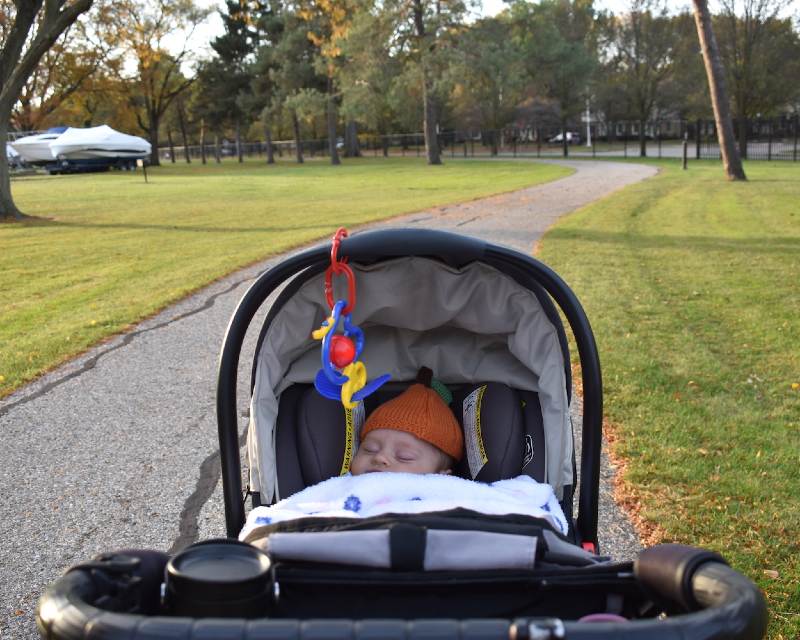
Newborns are extra sensitive to the surrounding elements. Hot weather puts them at risk of overheating, and cold weather could cause hypothermia.
Check weather conditions before you embark and dress your newborn accordingly.
RELATED:
Aside from prepping for weather conditions, align what you bring in your jogging stroller with what your baby may need while you’re out. A newborn isn’t going to wait quietly if hunger strikes during a long run.
Bring a bottle or nursing cover if you plan on prancing through feeding time.
Toss diaper-changing essentials into your jogging stroller, too.
In the event of a blowout (for baby), you can either have what you need on hand for an en-route diaper change or sprint home to the changing table.
Start with low mileage and work your way up
Whether or not you run with your newborn, running postpartum starts slow and steady. Your body is recovering from a phenomenon that literally no man could handle.
The added weight of a newborn in a jogging stroller will make your runs harder—that’s just the resistance training of it all.
Postpartum is not the time to match your prenatal pace or set a new PR. It’s the time when putting one foot in front of the other is applauded in the same way it would be if you won the New York City Marathon.
If your first postpartum run with a jogging stroller is at a snail’s pace, it’s still amazing. Trust as your body heals and builds strength from pushing that crate of a stroller, your speed and mileage will return.
Check on baby often
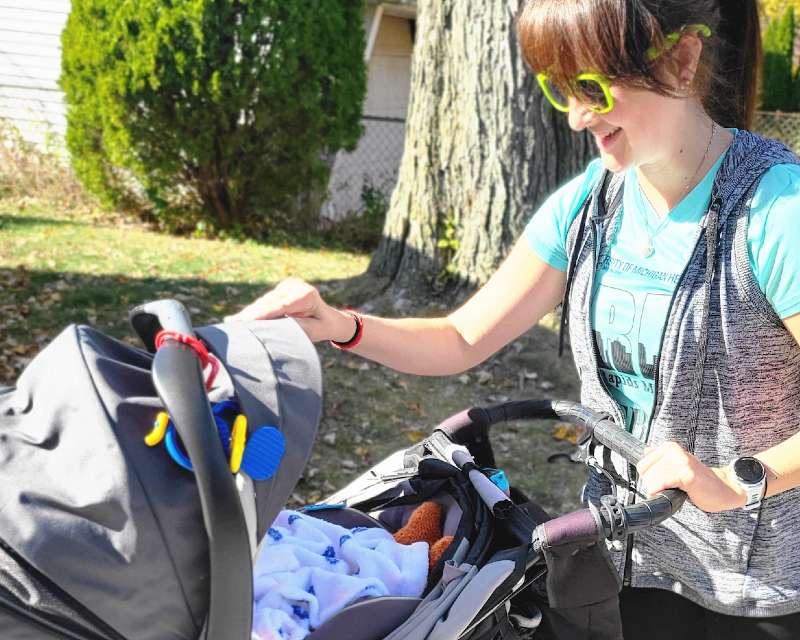
Running with a newborn is a new experience for both of you. Don’t let your fitness tracker keep you from pausing to check on your young baby.
If your newborn is fussy beyond repair or if you notice anything offbeat, make adjustments and carry on—even if that means cutting a run short and heading home.
Use this time to engage with your baby
Babies, even newborns, are always listening. Use your stroller runs as time to bond with them at this early age.
Talk about the fresh air, sing to them, and tell them your running story. Make observations out loud and narrate where you’re going every now and then.
Talking to your newborn in the jogging stroller fosters a sense that they are part of the activity rather than luggage along for the ride. As they learn to talk, both of you will have fun interacting with each other and the surrounding world during your stroller workouts.
Pack a pacifier
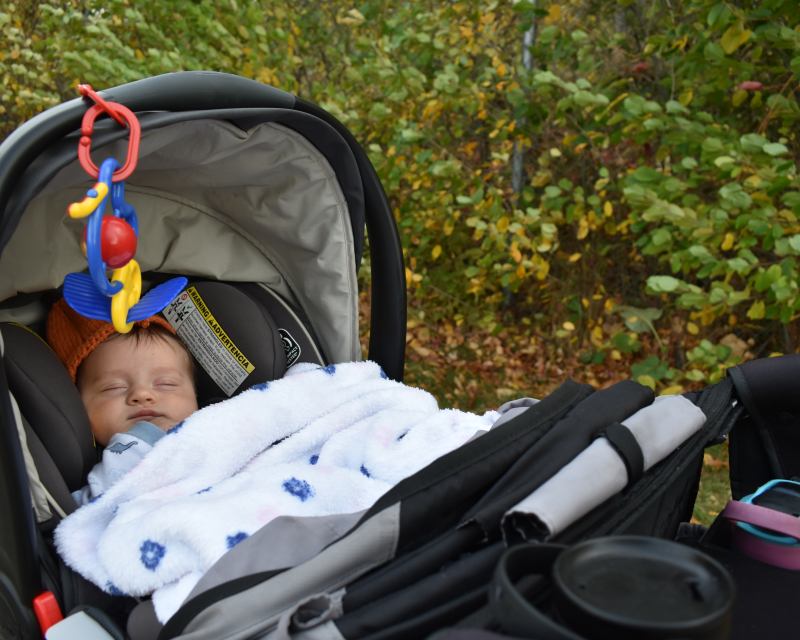
If your little one uses a pacifier, give it to them for the ride. Newborns can’t yet play with toys and are still working on developing 20/20 eyesight, so a pacifier gives them a bit of familiar comfort on the journey.
FAQs
What age is considered a newborn baby?
Experts and parents have varying opinions on when a baby evolves from newborn to infant. Some say it’s a baby who is 28 days old or less; others say a baby up to 3 months old is considered a newborn.
Therefore, there is no set definition. I referred to my children as newborns until they could walk.
For this article, I’m considering a newborn as a baby who cannot yet ride in a jogging stroller without a travel system. This is generally younger than 6 months old.
Why do I have to wait 6 months to run with baby in a jogging stroller?
Six months is the average age a baby is able to sit and hold their head up without assistance.
It means that by this time, the baby has enough neck and spine strength to stabilize themselves while bumping along in a jogging stroller.
Is it safe to run with a jogging stroller?
Yes. Jogging strollers are designed to prioritize your child’s safety and eliminate risk of baby falling overboard, being exposed to harsh elements, or enduring too rough of a ride.
Jogging stroller manufacturers have done their part to make a piece of baby gear that goes above and beyond safety standards. But it is your responsibility to maintain a safe ride.
Keep your jogging stroller on smooth routes when running with a newborn and prep them for the weather.
Why run with a newborn?
Having a newborn is a wonderful era.
It’s also debilitating, lonely, and borderline dehumanizing at times.
If running is one thing that revitalizes your physical and mental health—during this period that jeopardizes both—it’s important to find a way to make it happen.
Running can satisfy your need for triumph and endorphins while in the brutal pits of early motherhood, and most times a baby’s needs don’t allow you to venture on meditating solo runs. Therefore, taking your newborn along in the jogging stroller lets you reconnect with running and the high that comes with it.
Conclusion
Don’t expect yourself or your newborn to nail an exercise routine in the first month postpartum—you’ll drive yourself mad with self-criticism.
Running with a newborn in a jogging stroller is not a flex. Rather, for this precious breed of Out There Mothers, it’s a quiet need that shouldn’t have to be sacrificed (after all, you’ve already given up sleeping in for the rest of your life).
No matter how eager you are to get back into running, with or without a jogging stroller, know that it takes time, patience, adjustments, and several shortened runs. But the fact that you’re plodding toward a goal outside of increasing your milk supply is epic in its own right.
Keep it up. I’m proud of you.
