
Within the first couple of weeks after giving birth, a thought, amidst the newborn snuggles, about beginning postpartum pelvic exercises might come up.
Keep in mind that you did give birth to a tiny human, whether you had a C-section or natural childbirth. Regardless of the scenario, your core and pelvic floor will still need strengthening – once you have recovered, of course!
While some mamas might not feel up to it quite yet, there are some postpartum pelvic exercises that you can do from the comfort of your home.
Some of the best ways to strengthen and stabilize your pelvic muscles include:
- the cat-cow,
- a modified plank,
- and diaphragmatic breathing.
Let’s break them down so you can incorporate them into your daily routine during those first couple of weeks!
Postpartum pelvic exercises
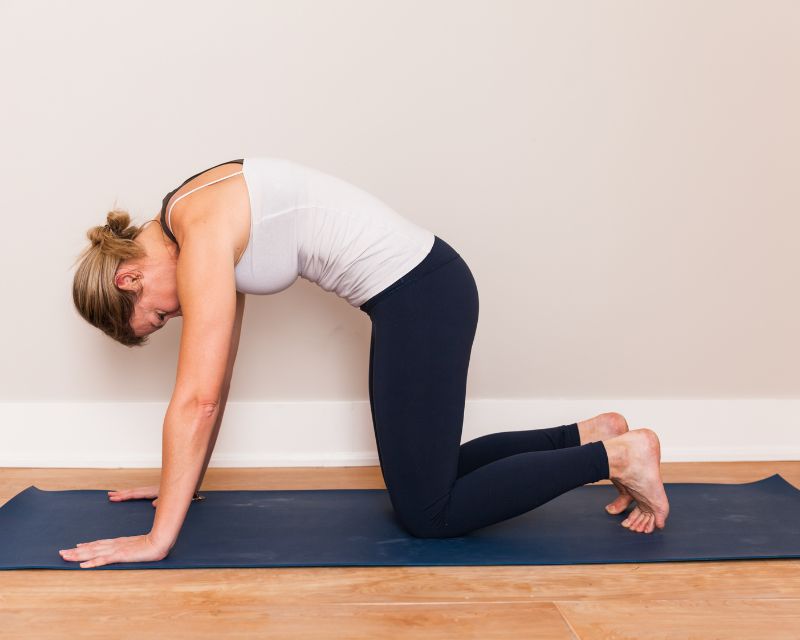
Cat-Cow
Starting position:
Begin on hands and knees with your shoulders stacked over your wrists and hips directly over your knees. Keep your spine in a neutral position and your gaze between your hands.
Step 1 — Cat:
Exhale and round your spine upward toward the ceiling, like a stretching cat. Tuck your tailbone under and gaze toward your thighs.
Step 2 — Cow:
Inhale and drop your belly toward the floor while lifting your head and chest. Let your gaze rise slightly upward, creating a gentle backbend.
Step 3:
Move slowly and mindfully between these two positions, syncing each movement with your breath.
Repeat for 6–8 gentle rounds, focusing on mobility and control.
Benefits of cat cow pose
This stretch improves spinal flexibility, promotes circulation, and gently activates the core—making it a perfect postpartum warm-up or cool-down.
There’s a reason why it’s known as one of the most popular postpartum pelvic exercises!

Pelvic tilt exercise
Starting position:
Lie on your back with your knees bent and feet flat on the floor, hip-width apart. Rest your arms by your sides.
Step 1:
Inhale deeply. As you exhale, gently tilt your pelvis backward, pressing your lower back into the floor.
Step 2:
Engage your core by drawing your belly button toward your spine. Breathe steadily.
Step 3:
Hold for a few seconds, then inhale to release and return to a neutral spine.
Step 4:
Repeat for 10–12 slow, controlled reps.
This movement helps activate your deep core and pelvic floor muscles and supports lower back stability.
Want more of a challenge? Try lifting your hips slightly into a bridge after the tilt.
Need extra support? Place a small pillow under your lower back to reduce strain.
Why pelvic tilts?
Pelvic tilts help make your lower back and hips feel more stable and strong. This move gently wakes up your core muscles without putting too much pressure on your body while it’s healing.
It also improves your posture, supports your pelvic floor, and makes it easier to return to harder exercises later on.
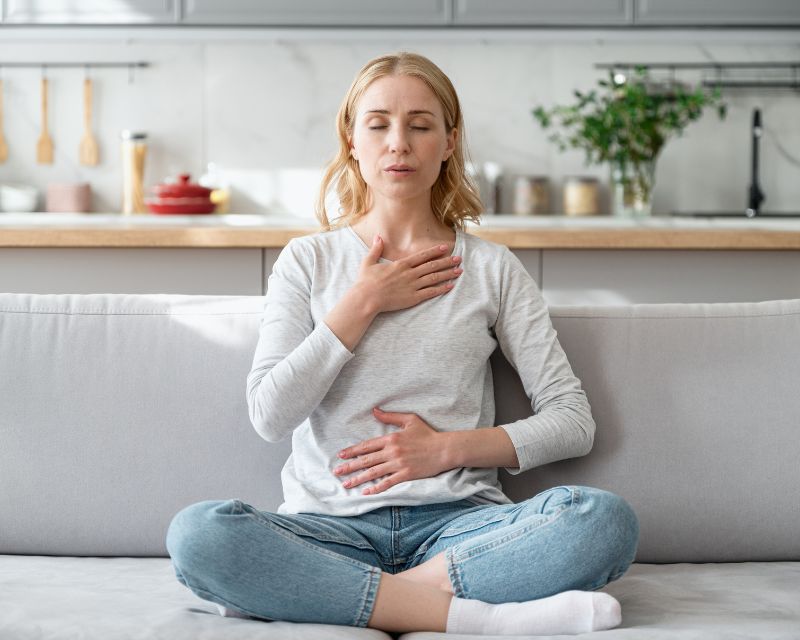
Diaphragmatic breathing
Starting position:
Sit comfortably on a chair or bench with your feet flat on the floor. Place one hand on your chest and the other on your belly to feel the movement of your breath.
Step 1:
Inhale slowly through your nose. Feel your belly rise as your diaphragm moves downward and your lungs fill with air.
Step 2:
Exhale gently through your mouth. As you release the air, engage your abdominal muscles and feel your belly lower as the diaphragm rises.
Step 3:
Continue breathing in this way for several slow, deep breaths, staying relaxed and focused on the movement.
Belly breathing benefits
Diaphragmatic breathing is essential for strengthening the pelvic floor musculature.
It also aids in increasing overall core stability and – bonus! – aids in relaxation. This, too, is one of the most popular postpartum pelvic exercises.

Start postpartum pelvic exercises 2 weeks after birth
The pelvic floor can essentially be thought of as a “hammock” that holds organs such as your uterus and bladder. These muscles stretch to accommodate a growing babe.
After birth, you need to strengthen your pelvic floor to reduce the risk of prolapse and urinary leakage.
Remember to speak with your physician if you have any questions or concerns about beginning pelvic floor training!
With that being said, you may not be quite ready to begin core training right away, and that’s okay. There are a lot of other routines you can follow, like this 2 weeks postpartum exercise plan!
Recovery is best at this stage, both physically and mentally.
However, if you find yourself having a few moments to yourself, then these can get you on the right track toward rebuilding strength and stability!
Remember, too, that even just walking around your neighborhood counts as exercise and will aid in recovery.
Some fresh air and sunshine do a body good, so on the days you aren’t feeling up to an actual mini-strength session, you can still implement some lower-impact activities (once you’ve cleared by your physician, of course).

Postpartum pelvic recovery tailored for you
Keep in mind that these postpartum pelvic exercises should only be done after you’ve first discussed them with your physician. Stop immediately and let your doctor know if you experience any pain or discomfort.
Movement as a whole is beneficial after birth, so if beginning postpartum pelvic exercises right away doesn’t feel right for you, that’s okay!
You can utilize many other outlets to strengthen and recover your pelvic floor. You can try using pelvic exercisers, aka pelvic wands!
Reaching out to a local pelvic floor therapist or postnatal physiotherapist is another helpful option, especially if you are concerned about movement quality, form, or technique.
Even just a few sessions can be beneficial and help get you on the right track toward recovery.
If you want to get back into running, you’ll want to strengthen your pelvic floor before you start pounding the pavement.
After incorporating the exercises above, check out these pelvic floor pt exercises for postpartum runners recommended by our physical therapist guest writer!
