
New mothers face a range of postpartum symptoms, and while emotions settle and appetite normalizes, some physical effects of pregnancy linger longer than expected.
One common struggle? Postpartum back pain.
The good news is that understanding its causes and doing the right postpartum stretches can help relieve discomfort and support recovery.
Table of Contents
5 Postpartum Stretches for Back Pain Relief
Postpartum back pain can be unbearable. These select movements can take the edge off, if done consistently.
T Spine Mobility Postpartum Stretches
Many of the causes for postpartum back pain have their roots in the spine and lower back region.
Keep your upper body flexible to shift as much weight to other areas of the body as possible.
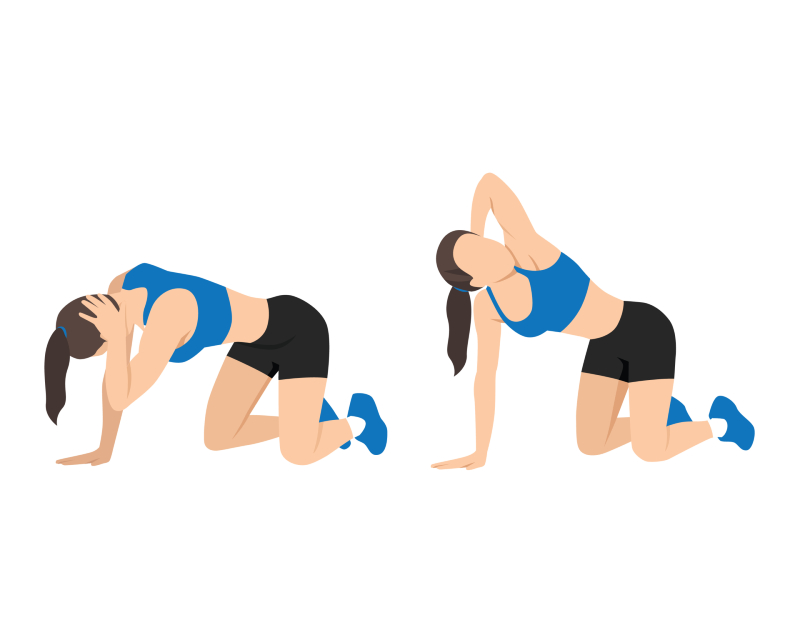
- Start on all fours with your hands and knees on the ground.
- Place one hand behind your neck, keeping your elbow pointed outward. Keep your chin tucked and ribs aligned—avoid crunching them together.
- Rotate your upper body, lifting your elbow toward the ceiling, then bring it down to touch your opposite wrist. Let your elbow guide the movement to avoid straining your torso.
- Switch sides and repeat, alternating elbows 5 to 10 times for the best results.
The goal is to work your upper body as much as possible without straining too much.
Shoulder Mobility
When you’re recovering from pregnancy, you’re probably content staying in bed and waiting for the postpartum effects to subside.
However, a lack of mobility in your shoulders can cause the following:
- headaches,
- tension in your jaw,
- and discomfort at the base of your neck.
All these contribute to more back pain for you.
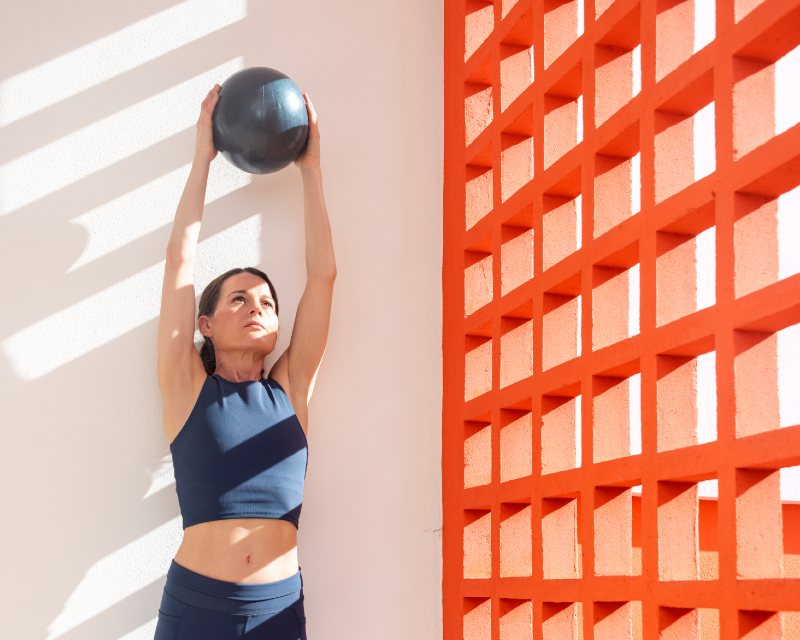
- Sit against a wall with a firm pillow supporting your lower back. Hold a soft ball or pillow in front of you.
- Relax your shoulders (away from your ears) and keep your chin down, parallel to the floor. Focus on steady breathing.
- Lift the ball toward the wall as you exhale, engaging your core to keep your shoulders stable.
- Lower the ball as you inhale, keeping the movement smooth and controlled.
- Stay relaxed and focus on your breath to maintain a steady rhythm throughout.
The goal here is to keep your shoulders active and mobile.
Pelvic Floor Stretches
While keeping your upper back mobile can help with back pain, it doesn’t target the root cause—your pelvis.
If you’ve made it this far, you know how much strain pregnancy and delivery put on your lower back and pelvis.
The recovery process can feel slow, but the right exercises can help.
For example, one that works both the pelvic area and adjacent back muscles.
Prepare an exercise ball or a sturdy chair you can comfortably lean on while seated.
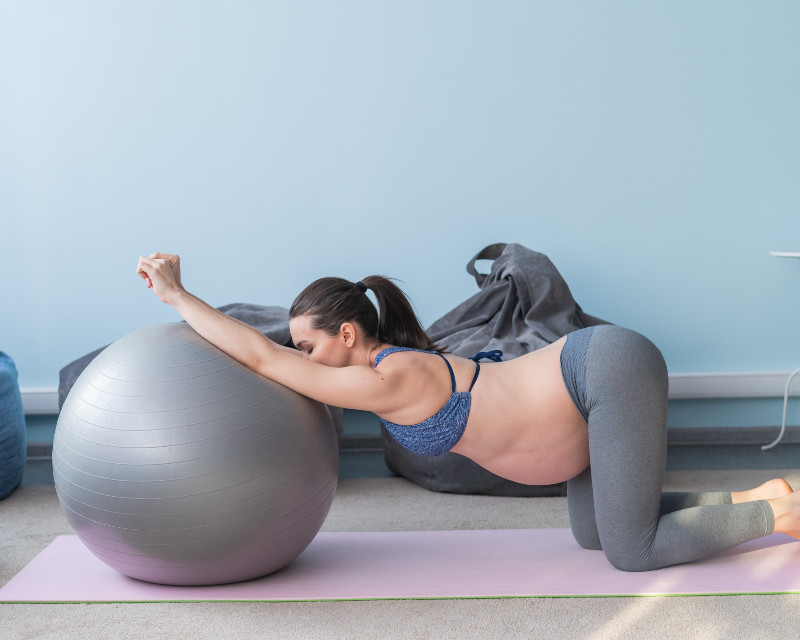
- Sit in front of the ball with a straight but relaxed back.
- Rest your forehead on crossed arms placed on top of the ball. Keep your chin down.
- Gently roll the ball forward, allowing your back to relax and your hips to stretch.
- Avoid overextending—the stretch should feel mild and relieving, not painful.
- Gradually increase the stretch over time, but always stay within your comfort zone.
Give the lower back a gentle workout by stretching some of its muscles.
Back Rolls
Don’t put your exercise ball back in storage just yet.
This next exercise not only helps relieve some of the pain in your lower back but also doubles as a soothing massage.
The goal of this variant of postpartum stretches is to work your core muscles to support your back.
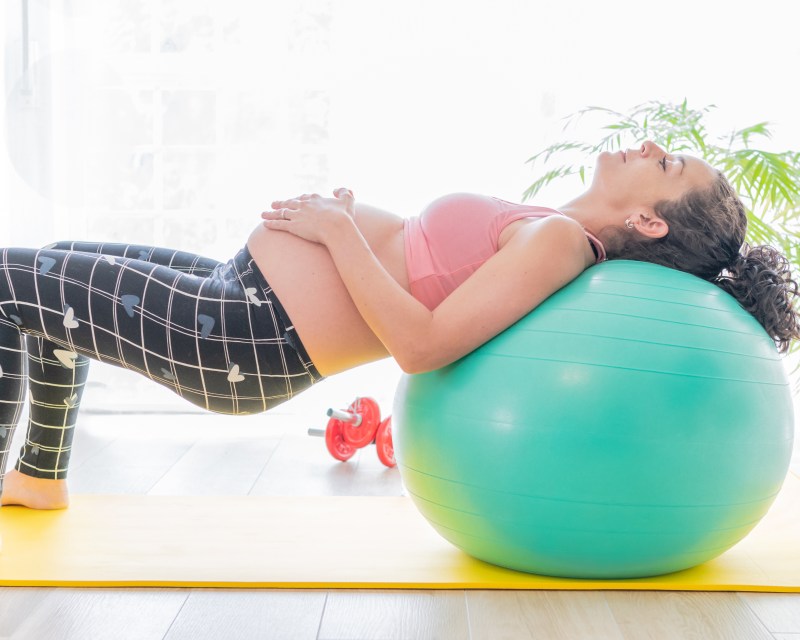
- Sit in front of the ball with your back against it. Your feet should be planted firmly on the ground.
- Gently press your back into the ball and allow it to roll with you—keep your feet grounded the entire time.
- Let the back of your head rest on the ball, keeping your shoulders relaxed and arms at your sides.
- Slowly roll backward and forward or side to side as needed. Keep your motions slow and smooth to avoid hurting yourself.
- When you’re ready, gently come back down to your original seated position.
Lower Back Relaxation
This comprehensive lower back exercise should address all the main sources of your postpartum back pain.

For this movement, you’ll need a soft mat and a piece of furniture such as a couch or chair.
- Lie on a mat with a chair in front of you.
- Lift your feet onto the edge of the chair, keeping your hips and knees at a 90-degree angle.
- Support your head with your hands if needed, and keep it slightly raised as if suspended by an invisible string.
- Slowly relax your back, lowering yourself vertebra by vertebra until you’re flat on the mat.
- Focus on steady breathing and repeat 5–10 times. Increase the reps as you get more comfortable.
After this, you’ll be able to relax your back and improve your posture.
What Causes Postpartum Back Pain
Typically, postpartum back pain is the direct result of trauma involving the lower back and pelvic bones, joints, and soft tissues, most of which are unavoidable.
However, the type of delivery (vaginal, instrumental, or C-section) can also contribute to postpartum back pain.
Additional Causes of Back Ache Pain
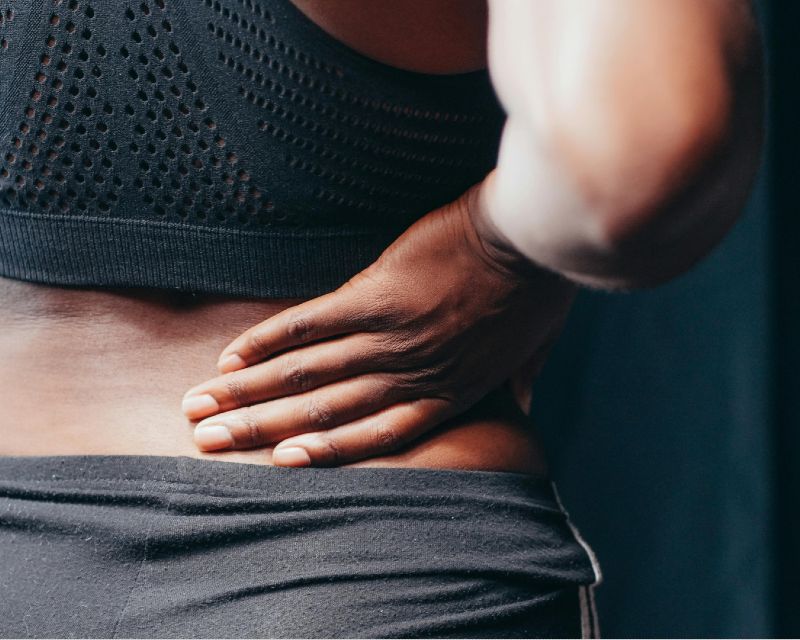
Aside from the usual culprits, other lesser-known factors affect postpartum back pain. Some of the include:
Changes in Postpartum Hormones
During pregnancy, your body adapts to accommodate the added weight in your belly.
Specifically, your hormone levels adjust themselves to relax your joints.
Relaxin, estrogen, and progesterone all surge to release the tension in your lower body.
After pregnancy, hormones drop significantly in an attempt to return to their pre-pregnancy state.
This process typically takes around 6 to 8 weeks and has several effects, including:
- General weariness
- Intolerance for activity
- Pain in the hip and lower back
- Back pain during exercise or other physical activities (such as walking)
Keep the lower back supported to ensure these effects do not happen beyond this period.
Abdominal Separation Post Pregnancy
You may have noticed your belly start to swell during pregnancy.
Do not be alarmed – this is a natural side effect of the uterus expanding to accommodate the little life growing inside.
As the uterus enlarges, the muscles surrounding it (the abdominal wall) also stretch.
The result is a condition known as diastasis recti, characterized by loose muscles lacking definition.
Diastasis recti also compromises your body’s postural stability and the overall strength of your back and lower body, leading to persistent back pain.
A study conducted by Unsgaard-Tøndel et al. (2016) proved that deep muscle stretching of the abdominal wall, specifically the transversus abdominis, also helps with back pain.
Pelvic Activity After Birth
The pelvic area changes during pregnancy but typically reverts to its prior state without a hitch.
However, these changes can sometimes have lingering effects that last for months or even years.
These issues are generally characterized by persistent dull pain in the lower back. More severe pelvic pain can be sharp and stabbing without relief.
You may use these quick ways to strengthen pelvic floor muscles for a slow and steady recovery.
Coccyx Overextension
Your coccyx, directly connected to your pelvis, is drawn backwards to accommodate the delivery.
This motion is natural, and the coccyx will generally return to its original state shortly after the delivery.
In rare cases, however, it can be forced back beyond its normal range of motion when:
- giving birth to large babies,
- during an instrumental delivery,
- or excessive weight gain during pregnancy.
The condition, coccydynia, manifests as pain:
- when shifting from sitting to standing,
- during bowel movements,
- while having intercourse,
- and swelling in the tailbone area.
Fortunately, coccydynia is a temporary condition that only lasts a few weeks or months.
However, it can make even the most mundane activity much more painful.
Sacral Spine Injury
Like your coccyx, the lower region of the pelvic area – known as the sacral spine – can also endure some serious trauma during pregnancy and childbirth.
This type of trauma is known as a stress fracture and occurs typically as a result of coccydynia (as mentioned above).
Sacral stress fractures can also be the result of:
- increased curvature in the lower back,
- or the use of blood-thinning agents like heparin.
The effects are similar to that of coccydynia.
How Long Does Postpartum Back Pain Last?
Postpartum back pain typically lasts 6 to 8 weeks.
However, this period will vary depending on factors, such as overall health, recovery habits, and body changes.
These changes are perfectly natural, and your body will revert to its pre-pregnancy state after recovering.
That doesn’t make postpartum back pain any more bearable. Fortunately, there are plenty of exercises like postpartum swimming and stretches that you can do for the discomfort.
Postpartum Stretches for Back Pain
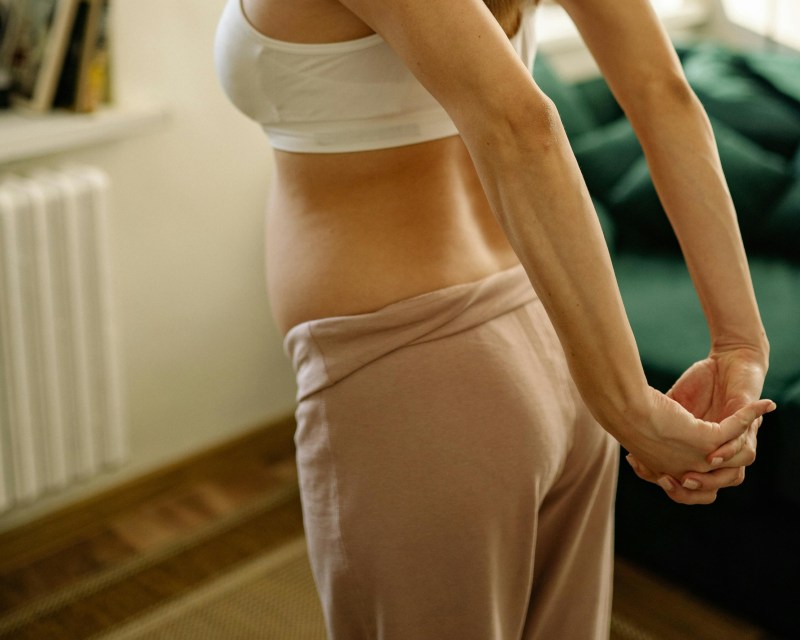
If your back pain lingers beyond two months or you experience other concerns, check in with your doctor to find the best course of action.
While there’s no instant fix for back pain, these postpartum stretches can help ease discomfort and make daily movement more manageable. Stay consistent, listen to your body, and take it one step at a time.
Recovery takes time, so be patient with yourself and avoid pushing too hard too soon. The goal is to support your body, not strain it.
