
When it comes to postpartum recovery, most moms hear about walking, gentle yoga, or pelvic floor exercises. But what if your best option is waiting for you in the water?
Swimming postpartum is a low-impact, full-body workout that offers something many other recovery exercises don’t.
In the water, your body feels lighter, joints are supported, and movements become smoother—all of which can be incredibly relieving after months of carrying and delivering a baby.
It’s one of the few exercises that allows you to build strength, improve cardiovascular health, and relax your body without putting excess strain on healing muscles and joints.
Today, our guide will talk you through:
- when it’s safe to return to the water,
- all the incredible benefits of swimming for new moms,
- and a free postnatal swimming workout routine!
Let’s jump into the guidelines around swimming after having a baby!
Table of Contents
When can you swim after giving birth?
You should wait until the bleeding and discharge stops or any of the above symptoms go
away! This may take around 6 weeks.
In case of C-section delivery, wait for the stitches to heal to avoid infections.
Once they’ve been removed or dissolved, and you don’t experience pain, you are ready to start swimming.
Every individual’s body is unique, and healing may vary. So, there is no one-size-fits-all when
one can go back swimming postpartum.
I recommend always consulting your doctor. Especially when experiencing the above-mentioned problems.
With regular check-ups, they can monitor your recovery and provide personalized advice when you are ready for swimming postpartum.
Plus, with all your added responsibilities as a new mom, it may also be quite difficult insert swimming into your schedule.
Postpartum swimming will be a cinch if you just know how to find time to exercise as a busy mom.
Avoid swimming before 6 weeks postpartum
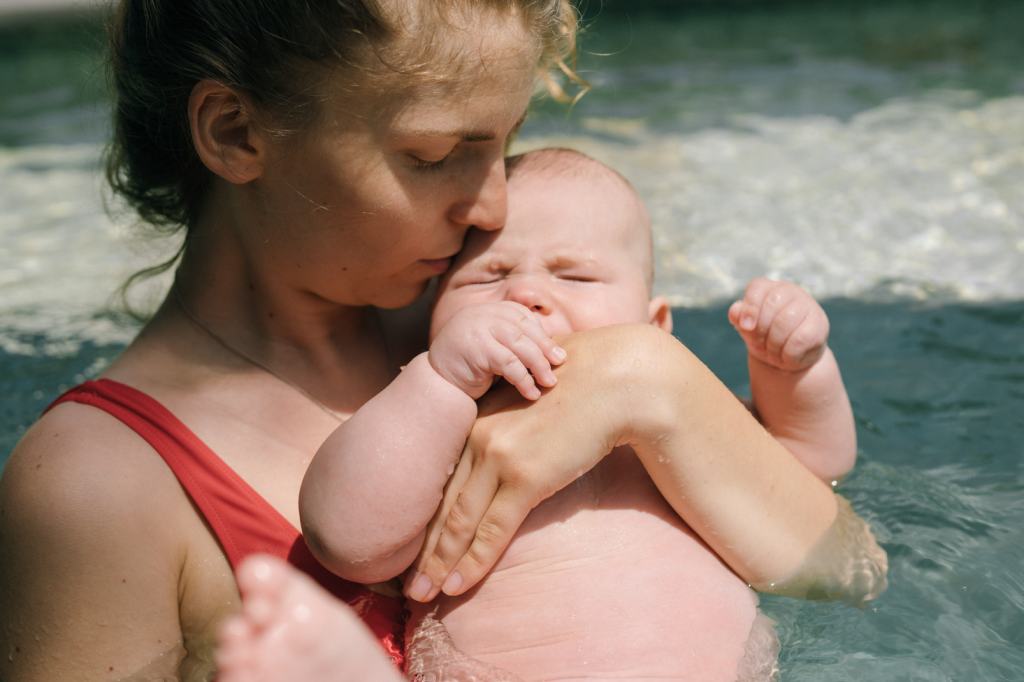
It’s not recommended to swim straight after giving birth.
That’s because the uterus lining might not have healed yet. Until then, even bathing should be avoided because of the high risks of infection.
In some cases, it can take longer.
Signs you're not yet ready for postnatal swimming
Here are a few symptoms that can help you recognize whether you are ready to return to the pool or not:
Persistent vaginal bleeding or lochia
If you continue to experience heavy or prolonged vaginal bleeding (besides the typical postpartum bleeding period), it might be a sign that your uterus hasn’t healed completely.
Severe or worsening pelvic pain
Pelvic pain, especially that gets worse rather than better over time, can indicate a problem with your uterine wall’s healing process.
Looking for gentle alternatives? Try our beginner-friendly pelvic floor exercises.
Foul-smelling discharge
An unpleasant vaginal odor may be a sign of infection or delayed healing.
Abdominal pain or tenderness
Pain in a specific area of the abdomen could point to internal healing issues.
Signs of infection
Fever, chills, itching, painful urination, redness, increased heart rate, and excessive fatigue can all be signs of infection.
It can also indicate infection in the incision site (cut on the skin from c-section) could indicate a problem.
Trouble with urination or bowel movements
Difficulty in these areas might reflect unresolved internal trauma or inflammation—another reason to postpone swimming.
Benefits of swimming postpartum
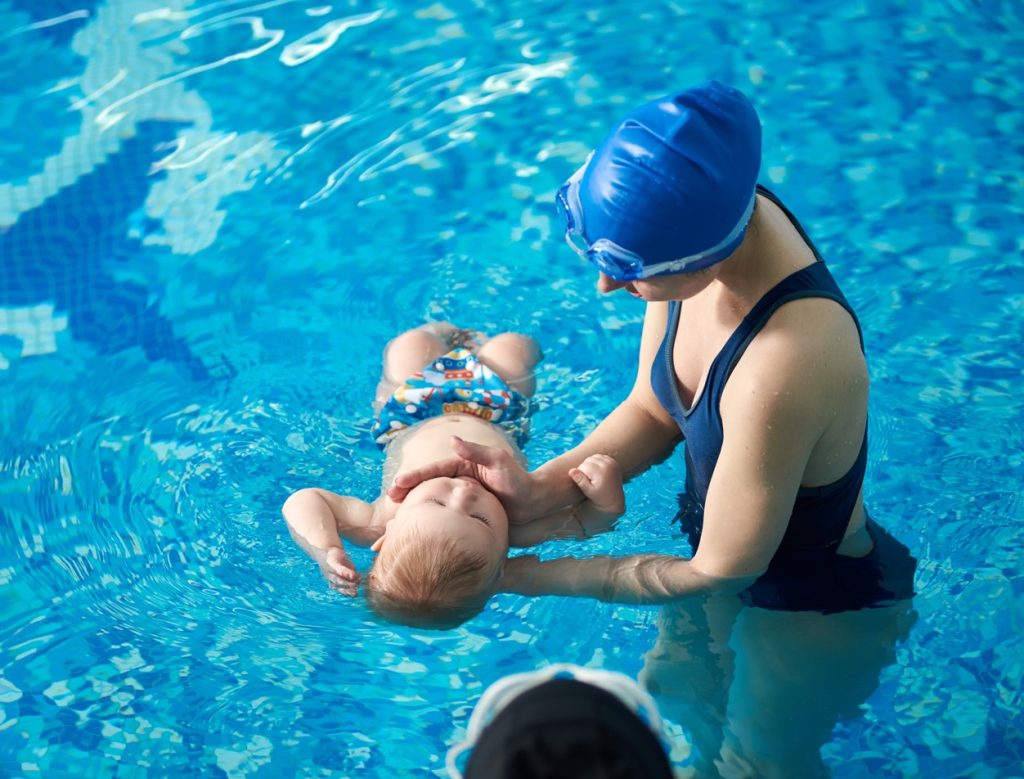
Swimming after childbirth has several benefits, including:
● Low-impact, joint-friendly workout
● Reduces stress
● Strengthens the core and pelvic floor
● Increases energy
● Improves mood
● Aids in better posture
● Helps to tone up
● Boosts your fitness level
● Helps improve heart and lung health
● Provide a social outlet
● Help avoid postpartum depression
● Aids in post-baby weight loss
Need more convincing? Read along!
Is swimming good for weight loss?
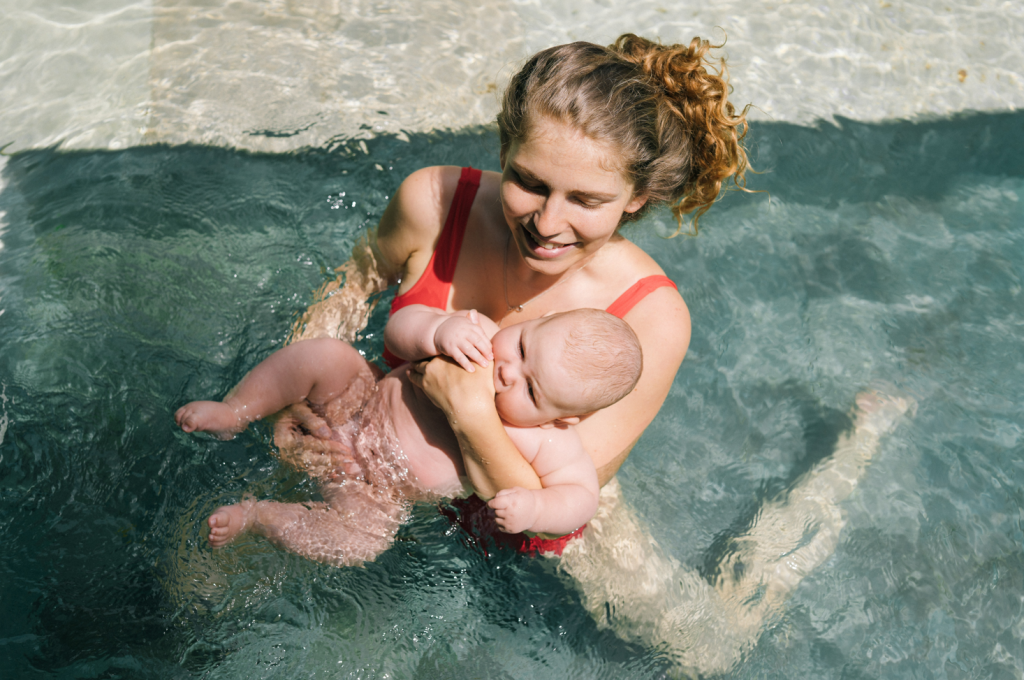
It’s a full-body workout involving a lot of muscles, burning calories. The more intense and longer you swim, the more calories you burn.
Also, as a cardiovascular exercise, it can increase your heart and lung capacity and help you burn fat.
Building lean muscle through swimming can also increase your basal metabolic rate, which means you’ll burn more calories even when you’re watching TV.
But don’t forget, it’s not a magic solution to everything!
To successfully lose weight, you need to find the balance between calories burned (through exercise and daily activities) and calories
consumed.
Calories in vs calories out, ladies!
Don’t worry, we’ve got the best stay-at-home mom diet plan and weight loss tips specially curated for you!
Your free swimming postpartum workout
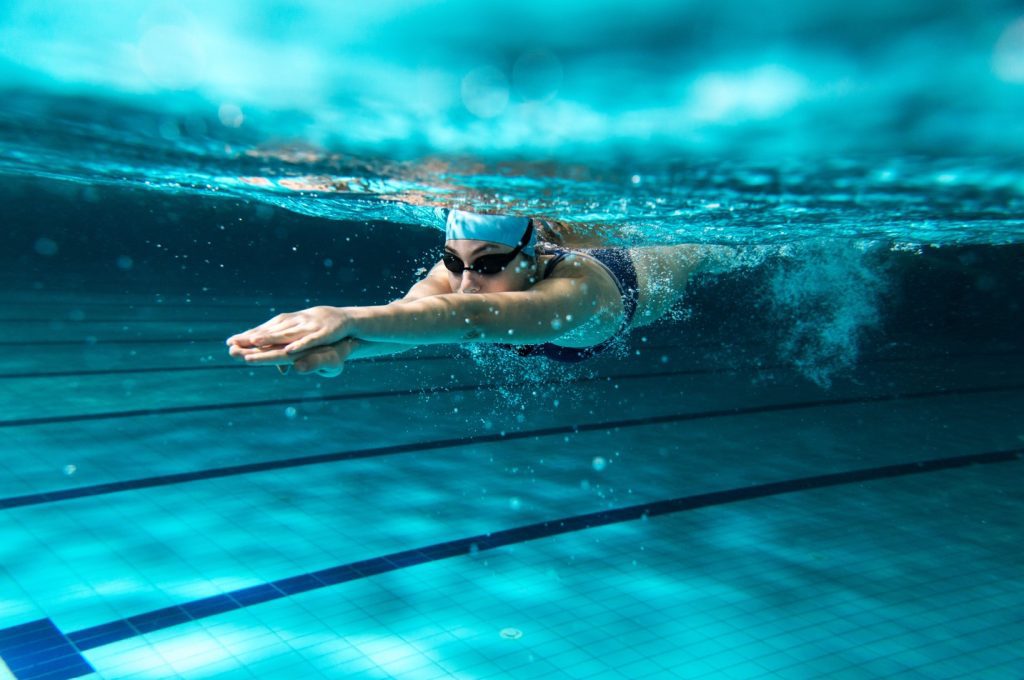
Before I begin with our postnatal swimming workout, please remember to be patient with yourself! You may not have the same fitness level as before. It’s normal!
Your incredible body nurtured and grew a child for 9 months. It was a home for your baby. It’s entitled to
changes.
The most important thing to get results is to show up for yourself, swim, and enjoy it.
Now, let’s get you started with an awesome plan!
Warm up (5-10 minutes):
If the water is shallow, walk 2 lengths of the pool with your hands behind your head. You can also do a few easy freestyle laps to get your heart rate up.
Then, perform a few dynamic stretches in the water, such as:
● Leg swings
● Arm circles
● Side steps
● Torso twist
These are much harder to perform in the water because of the resistance.
Main workout (20-30 minutes):
Start with leg kicks. Hold onto the side of the pool and scissor kick your legs like when you are doing
front crawls. Do it 3-5 times for 5-10 seconds.
Breaststroke swim for 10-15 minutes, or as long as you can.
You can do pool jogs or walks when you feel a bit more tired. This can make up for active recovery, too.
You can also participate in water aerobics classes or do exercises in the pool with noodle floating foam, including:
● Noodle plank
● Noodle crunches
● Bicycle kicks
Cool-down (5 minutes)
Reduce your heart rate with 2 lengths of slow-paced pool walks. Then, complete static stretches
for an additional 3 minutes.
Progressive overload for swimming postpartum
Gradually increase the length and intensity of your swimming as you get fitter.
Take regular breaks if you need to and avoid any painful movement, especially after a
C-section.
Starting your postpartum swimming journey
Once your doctor has given you the go-ahead -usually around six weeks postpartum after giving birth- swimming postpartum is a wonderful exercise for new moms.
Keep in mind that this timeline can vary depending on your healing, self-care, and whether you’re still experiencing symptoms like:
- vaginal bleeding,
- discharge,
- pain,
- or signs of infection.
Listening to your body and attending regular checkups are key to avoiding complications and ensuring you’re truly ready to return to the water.
Progress won’t always feel linear, and that’s okay. It’s normal to have moments of doubt or frustration.
On those days, try documenting your fitness milestones. Even the smallest wins count. And looking back will remind you of how far you’ve come.
